

The NCAA is going to start cracking down on international players coming to college basketball. It's an effort to stop college hoops from being a fallback option for players who don't work out in the NBA or with lucrative contracts overseas. Right now, the NCAA is being flooded with middle twenty-year-olds from international waters because college basketball pays more.
The NCAA is looking to stop that, but with the way the current wording is structured, it would cause a ton of problems in college basketball, especially if enforcement goes into effect immediately. Teams like Wisconsin, with a large chunk of their roster from overseas, would swiftly be left high and dry with no suitable replacements.
The fact that teams like Wisconsin would have to forfeit the season due to loss of players makes it seem unlikely that it will actually happen the way it is currently worded. But there will be guidance going forward and tighter rules from the NCAA about international players. Let's look a little closer, though.
New guidance issued by the NCAA to schools earlier this month opens the door for a crackdown on the tidal wave of international pros hoping to head to college basketball. Players from top leagues could face added scrutiny.
— Kevin Sweeney (@CBB_Central) May 21, 2026
Statement from NCAA enclosed: https://t.co/whdbVQvLCu
The NCAA is beginning a process that would crack down on international players
Related: John Blackwell's exit to Duke is now done as the NBA feedback was bleak
International players have always been part of the college process; in fact, international students are part of the normal college life. However, what has been happening since NIL came into play is that professional athletes are swooping into college to make money, not to go to school. So, some enforcement is necessary, but exactly where the line is isn't clear.
According to the report posted by Kevin Sweeney, "The guidelines state that prospective student-athletes who “entered an agreement with, competed on or received compensation from a team that participates in a league with minimum compensation that exceeds actual and necessary expenses” will not have their college eligibility reinstated. The document lists MLB, NBA, NFL, Premier League and WNBA as examples of such leagues, but other top basketball leagues globally could also qualify."
The language is all around, taking a professional contract overseas and then coming to college. Which is certainly a gray area, but one example of a developmental league is the NBL in Australia, or a similar version in New Zealand, where 15, 16, 17-year-olds are welcome to compete professionally as they develop. These players aren't even eligible for college yet, and would they be unable to play?
You can make the argument that this was the right move with some added stipulations, but the timing is horrible.
— Owen Jury (@ojury_007) May 22, 2026
If this gets signed are teams going to have to forfeit their season?
Teams like UT-Martin, LSU, Wisconsin etc. would have max 7 guys left, in LSU’s case like 3. https://t.co/O5Hc3AkYCC
Wisconsin has six players who have played professionally overseas
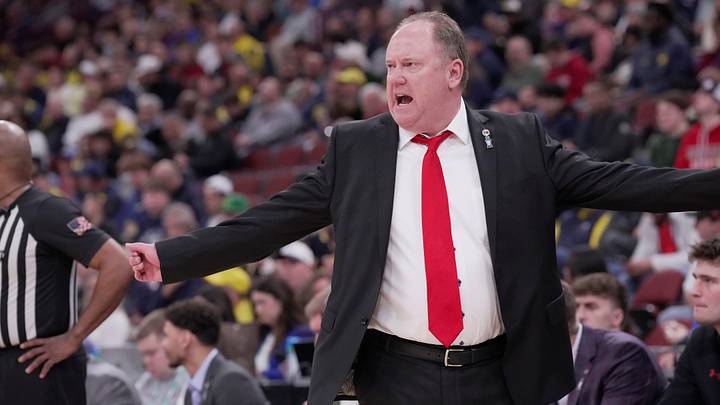
Wisconsin has a few of those exact players, as Greg Gard has recruited the "Down Under" really well. Jackson Ball, Hayden Jones, Owen Foxwell, Isaac Riddle, and Austin Rapp all played in the NBL. That's five players right there who couldn't play if the rules are enforced to the exact letter of the law. You can also add in Victory Onuetu, who played in a professional developmental league in Spain.
There wouldn't be enough players to even compete. So if this is signed and enforced right now, teams like Wisconsin are absolutely screwed. There is one way things could help Wisconsin. Back to Sweeney's report, "For players who earn above actual and necessary expenses based on contracts required to be submitted to the NCAA, the guidance states that reinstatement will be evaluated on a “case-by-case” basis considering how long the player was receiving a salary above their expenses, the quality of the league they played in and other factors."
It's hard to tell how this will all shake out, and of course, there will be all sorts of legal cases to prolong it or make it more muddy, but for now, it's alarming for programs like Wisconsin.
 Add us as a preferred source on Google